Application map / US purchasing briefs
Top handle chainsaw application requirements
Match the handle form to the intended task before requesting a quotation. Describe the working position, vegetation, cutting capacity and operator requirements so an inappropriate tool is not treated as a substitute.
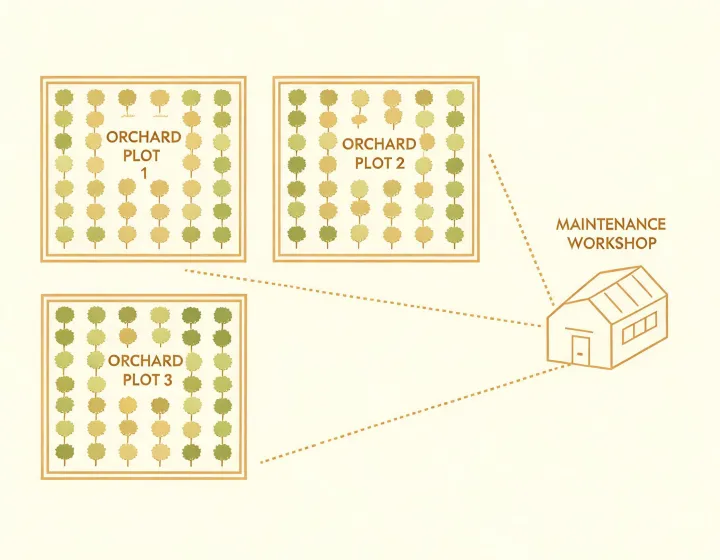 Application planning illustration / no service coverage claim
Choose the working context
The tabs group procurement questions by application, not by claimed local offices or supplier coverage. Location-specific requirements must be reviewed for the exact destination and intended use.
Orchard maintenance brief
State the crop or farming application, vegetation and expected branch diameter, seasonal workload and working position. Ask the buyer's competent operator to review the manufacturer's intended-use restrictions and training requirements for a top handle configuration. A compact outline does not alone demonstrate suitability for the work.
Keep bar length, chain pitch, gauge and drive-link count fixed across the quotes. Request the complete-tool weight on the proposed power configuration and a reference for replacement bars and chains. Confirm what tools, covers and documentation are included in each pack.
Record before quotation
- Tool form and intended task
- Working or cutting capacity
- Power platform and pack contents
- Quantity, US destination and seasonal date
Land management purchasing scope
Separate ground-level cutting, clearing and any specialist work into their own requirements. Record timber dimensions, operating conditions, transport limitations and service-part demand. Ask the supplier to identify the proposed handle arrangement and intended use, rather than assuming every chainsaw form is interchangeable.
Gas options require engine and service details; battery options require a charging and spare-pack plan. The buyer should review local operating restrictions and the exact model manual before accepting a proposal. Delivery schedules remain subject to configuration, quantity, documents and transport confirmation.
Distributor assortment planning
Record quantity by configuration, unit versus kit packaging, manual language, labels and replacement-part references. A mixed assortment may have different MOQs from a single-model order. Ask each factory to identify whether sample specifications and production specifications are identical.
Confirm the model information and applicable destination documentation before importing. Supplier warranties and support arrangements need their own written terms; Terra Ledger Sourcing does not adopt another company's warranty or certification.
Comparison coverage
Four RFQ groups to complete
The bars show a checklist structure, not measured product performance or business results. Complete each group in the procurement record and flag unavailable evidence.
For example, an orchard buyer comparing a top handle model with a rear-handle alternative would retain the same cutting task and quantity, then record the form difference separately. The review outcome is a visible suitability question for the buyer to resolve, not a claim that either configuration performs better.
Translate the application into an RFQ
Browse the chainsaw configurations and describe the intended work, quantities and destination. Include optional budget and whether your priority is initial cost, replacement parts or supplier support. A preference is a buying criterion, not a verified supplier grade.